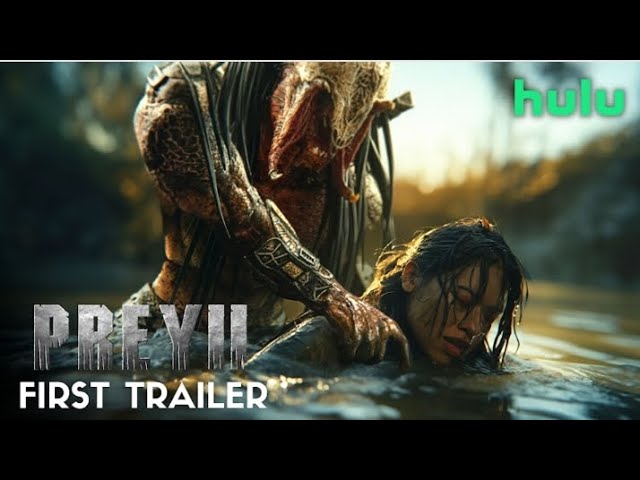
The Hunt Is No Longer Human vs Beast… It’s Human vs Intelligence Itself
I thought this would just be another survival thriller in the wilderness… but within minutes, it becomes clear this is something far more calculated, far more disturbing. Prey 2 doesn’t just bring back fear—it evolves it.

Something is wrong in the North American wilderness. Entire regions have gone silent. No animals. No signals. No survivors. And when a specialized research team enters the zone, they expect science… not a predator that studies them like prey in a lab experiment.

And then… everything changes.

A Wilderness That Feels Alive… and Watching You Back
This isn’t your typical survival terrain. The forest breathes differently here. Every rustle feels intentional. Every shadow feels placed. The film turns nature into a psychological trap, where silence is more dangerous than sound.
The team quickly realizes they are not exploring the unknown—they are being observed by it.
Why Everyone Is Suddenly Talking About This
What makes Prey 2 stand out in the crowded sci-fi action space is its terrifying idea: the predator is not just hunting… it’s learning.
- It adapts faster than humans can strategize
- It predicts movement patterns with unsettling accuracy
- It turns survival tactics into predictable routines
- It transforms the environment into a controlled battlefield
And the most disturbing part? It seems to enjoy the process.
The Characters You Start Rooting for… and Slowly Lose Confidence In
The survival team starts as capable experts—scientists, trackers, and tactical specialists. But the wilderness strips them down emotionally and mentally, one decision at a time.
You begin to notice something unsettling: intelligence means nothing when your opponent is always one step ahead.
Trust collapses. Leadership shifts. Panic spreads. And survival becomes less about skill and more about luck… or sacrifice.
A Spectacle Worth Watching on the Big Screen
Visually, Prey 2 is breathtaking in a brutal way. Wide forest shots feel infinite, yet claustrophobic. Night sequences are almost suffocating, using darkness not as absence of light, but as presence of threat.
The action is not constant—but when it hits, it hits hard. Fast, sharp, and brutally efficient.
There’s a tension in every frame, like the film is holding its breath… waiting for you to blink.
Strengths
- Extremely tense and immersive survival atmosphere
- A highly intelligent and unpredictable antagonist concept
- Strong psychological pressure throughout the story
- Cinematic wilderness visuals that feel alive and threatening
- Creative escalation of the “hunter becomes hunted” theme
Weaknesses
- Some secondary characters feel underdeveloped under pressure of pacing
- A few survival decisions stretch believability
- Minimal emotional downtime may exhaust casual viewers
The Scene That Stays With You Long After It Ends
There’s a moment deep in the forest where silence lasts just a little too long. No music. No movement. Just the sound of breathing—and then realization.
The predator isn’t chasing anymore.
It’s waiting.
And that shift changes everything you thought you understood about survival horror.
What Viewers Are Saying
- Michael Turner: “I’ve seen survival movies before, but this one felt like the forest was alive.”
- Sophia Grant: “The intelligence of the predator genuinely stressed me out in the best way.”
- Daniel Brooks: “I kept thinking they had a plan… then the movie proved me wrong every time.”
- Emily Watson: “It’s not just scary—it’s mentally exhausting in a brilliant way.”
- Jason Cole: “That forest is now permanently unsettling to me.”
- Olivia Reed: “Every scene felt like a trap closing in slowly.”
- Ryan Mitchell: “One of the smartest survival concepts I’ve seen in years.”
- Hannah Lee: “I didn’t breathe properly for half the film.”
- Ethan Parker: “The tension never drops. Not even for a second.”
Frequently Asked Questions
- Is Prey 2 connected to the first film? It expands the universe but introduces a new, evolved threat and storyline.
- Is it more action or horror? It blends both, but leans heavily into psychological survival horror.
- Do I need to watch the first Prey? No, but it enhances the experience of the evolving hunter concept.
- Is the film very gory? It focuses more on tension and strategy than excessive gore.
- Is it worth watching in theaters? Absolutely—the sound design and visuals are built for the big screen.